IQ is one of the most known neo-prog bands around, they are sometimes categorized into the same genre as Marillion and Pendragon.
 In 1976, self-taught guitarist Mike Holmes met Peter Nicholls- an art student (and part time actor) and drummer Niall Hayden at a Genesis concert and decided to form a band named The Giln. Unsatisfied with their band's name, it was quickly changed to- The Lens, which lasted roughly 5 years (1976-81) and went through many personnel changes, including the addition of keyboard wizard Martin Orford and Les (Ledge) Marshall on bass. Till the summer of 1977, Kev Sharpe (keyboards) and Rob Thomson (bass) also participated in the band. The Lens played mostly instrumental songs with the odd vocal contribution from Nicholls. After breaking up and reassembling with an entire new line-up, The Lens played mostly covers including some Pink Floyd and Hawkwind, but they added an original composition to the gig-list ever so often (some that evolved later into IQ songs).
In 1979 Sharpe, Hayden and Nicholls moved on and formed a band called- Delfin, which lasted from May 1979 till June 1981. Though mostly improvisational, the band wrote two singles but were never recorded.
Mike Holmes was not idle, writing a great deal of material and has teamed up with Orford to release a demo tape entitled `No TV Tonite,' though instrumental, it showed the direction that would become IQ. Nicholls' Delfin broke up during that same timeframe.
After the breakup of The Lens at the end of 1981, Mike and Martin decided to continue their musical partnership and formed IQ, which also included- drummer Mark Ridout and bassist- Tim Esau. After a few concerts, Orford suggested asking Peter Nicholls (who was performing with the band- The Same Curtain), to be their vocalist. After a difficult decision, Peter agreed.
In 1982, Ridout decided to quit the band and Paul Cook took over on the drum kit.
In the same year, IQ began to tour regularly, including at the famous Marquee club in London, (which at the time was a venue for up-and-coming new-progressive bands). Gaining a live following with the ad of Nicholl's stage personality (like Genesis' Peter Gabriel, he used make-up and masks to enhance the musical experience. The band opened up for the Enid.
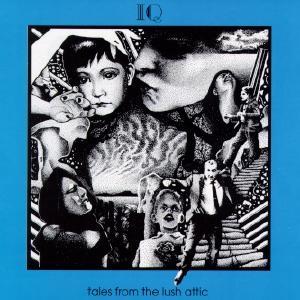
`Tales From The Lush Attic,' IQ's first album was released on September 15, 1983 (Nicholls also created the album art). The album, contained strong material, that sounded fresh. The began their first major U.K. tour with a headline gig at the London Marquee Club. Hey spent most of the remaining year touring the entire U.K. and more and more people were getting familiar with their music.
In 1984 IQ released `The Wake.' It is a dark album that revolves around the theme of death. To promote the album, IQ toured the UK again, supporting Wishbone Ash in large halls and headlining in the smaller clubs. On May 13th the band performed live for a London television series (the show was later released on Vinyl, CD and Video as `Living Proof,' by their ex-manager). Tensions within the band were high and with few band members speaking with each other, Nicholls quit the band. His last concert with IQ was on July 13, at the London Marquee Club for charity.
Though the most creative part of IQ's history left with Nicholl's departure, the band was not dead, Paul Menel, auditioned for vocalist and was hired. The band toured again as a support act to Magnum. Several new songs penned during the tour showed a more commercial sounding IQ. Meanwhile, `The Wake,' reached # 1 on the UK independent charts.
The band's first release with Menel on vocals was the double fanclub album- `Nine In A Pond Is Here.'
In 1985, the band was signed by the label- Squawk, a subdivision of Polygram. The new songs written in 1986 were a direct attempt at a more commercial direction.
1986 gave the band new areas to conquer... outside the UK. They toured with Pallas in Amsterdam and planned complete European tour.
1987's release of `Nomzamo,' was a mixture of commercial tracks and solid progressive rock. Squawk decided to release the song "Promises," but with only solid airplay in Germany and the Netherlands, the single was relatively unknown.
Despite the disappointment, `Nomzamo,' was IQ's best selling album to date. A major European tour ensued to excellent reviews. IQ even supported Genesis at the prestigious Montreux Festival.
In February 1989, `Are You Sitting Comfortably?' was released, again including a mixture of commercial and prog music. Sales were good and the band supported Mike And The Mechanics on their promotional tour.
Shortly after, Squawk (in financial problems), dropped the band. Menel and Esau left ot of frustration. IQ was put on ice for a time. Orford joined prog act Jadis.
In 1991, Les Marshall unexpectedly passed away, the remaining members were shocked, and in his memory decided to keep IQ going. Nicholls returned and John Jowitt (who had a fondness for the Motown and jazz), formerly of Ark fame, became the new bass player. John Jowitt elaborates: "My involvement in Jadis came about almost by accident, Jadis were looking for a bass player at time just when IQ were going out to do a couple of dates in Holland, er and er jokingly I said "Ho, ho, y'know if you want somebody to do the bass I'll do it... ha ha ha", and er.... and as a consequence the following week I was in the studio (with IQ)..."
IQ started their own independent record label- Giant Electric Pea (G.E.P.). The band toured Germany and sold out shows in Holland- they still had the magic. They headlined at the first progressive rock festival in Los Angeles' Royce Hall at UCLA the following year later.
On the 12th of June 1993, IQ's 5th album called `Ever,' and the band played a rousing concert in front of a European audience. The show was filmed as well for later release as a video/cd pack.
In 1994, the band co-headline rain-soaked Planet Pul festival in Uden, Holland with Steve Hackett. After another hiatus, the band released the `Forever Live,' box set.
On September 5th 1997, IQ released their 10th album Subterranea. The album launch was combined with two concerts at The Met in Bury (UK) on the 5th and the 6th. During both shows the full double album was played, as well as a couple of encores. The band played straight through the entire 103 minute album, non-stop. The music was accompanied by impressive projected film effects on a transparent screen which came down in front of the band, and some effects were projected behind the band as well. The film effects were mostly quite frantic images portraying the concept of the fight between a hero and a person named- The Provider. The band does a solid job establishing themes which are re-explored later in the album. Nicholls' lyrics are sufficiently abstract to stay interesting and elusive. The album was voted the best album of the year by the Classic Art Rock Society. Many call this album IQ's masterpiece. The video of the concert was finally released in September 2000.
The newest IQ album- `The Seventh House,' released at the end of 2000, was a darker venture than `Subterranea,' it doesn't not reach the splendor of `Subterranea,' but it can be easily compared in quality to `Ever,' or `The Wake.'
Martin Orford is current touring with his own self-named band. Members include: John Jowitt on bass, Jadis' Steve Christy on drums and IQ roadie/ Dirtbox guitarist Mark Westwood on guitar. The band will play Orford solo material and a few older IQ tunes. Orford and Gary Chandler will be playing their "unplugged" set as the opening act for Pendragon on their forthcoming European tour.
In November/December 2001, IQ will play a few UK gigs, celebrating their 20th anniversary as IQ, finishing up at the London Mean Fiddler (formerly LA2) on December 15th. They will return to Germany and Holland early in 2002.
Work is progressing well on `A Word in Your Eye,' an album of early pre-IQ material when Mike Holmes and Martin Orford were still in a band- The Lens. It should be released in November.
The Subterranea DVD was released, but only in PAL format. The concert including commentary by the band, interviews and stage show information.
Current IQ Line-up
A new IQ album is to be expected in the Autumn of 2003, preceded by a number of gigs to try out new material. Futhermore, a DVD of the 20th anniversary concert will be released sometime next year as well, and the band is now seriously considering re-recording the Tales From The Lush Attic album, with possible bonus material.
During the mid-2000's, the band suffered a few changes in the IQ line-up. In early 2005, member Paul Cook left the band and was replaced on drums by Andy Edwards. On 20 July 2007 Martin Orford announced that he was leaving IQ and he was replaced by Mark Westworth from prog-rock band Darwin's Radio. As of late 2009, Paul Cook has returned to replace Andy Edwards on drums. On 7 October 2010, Mark Westworth announced on the band's official web site that he would be leaving the band and his final appearance with IQ was on 11 December 2010. On 1 January 2011, the band announced that Mark's replacement on keyboards would be Neil Durant, from instrumental prog-fusion band Sphere3. On 7 January 2011, bassist of 19 years John Jowitt announced on the band's website that he had left the band and that his last appearance with the band had also been the concert on 11 December 2010.[ John was replaced by original bassist Tim Esau in January 2011.
Dark Matter and Frequency has shown that the band is reaching it's mastery of composition. Both album were critical successes, and showcased powerful songs and strong instrumentals. Dark Matter's Harvest of Souls is an epic 20 min. plus song that shows that IQ is on top of their game. Frequency's strongest tracks are: Frequency, Stronger than Friction, The Province of the King.
Andy Edwards’ decision to leave the band soon after led to the return of original drummer Paul Cook, and in 2010 IQ marked the 25th anniversary of their seminal album ‘The Wake’ with the release of a deluxe 4-disc collector’s box set featuring a host of previously unheard studio outtakes, demos and live tracks. The accompanying tour resulted in a live DVD of the album performed in its entirety, filmed in Holland. At the end of the year, Mark Westworth and John Jowitt both announced their departures from the group.
2011 was IQ’s 30th anniversary year. With the arrival of keyboard player Neil Durant and the welcome return of bassist Tim Esau, the band were able to celebrate this landmark in their illustrious career with four original members in the line-up. IQ performed successful live shows throughout Britain and Europe.
In 2012, IQ celebrated the 15th anniversary of ‘Subterranea’ by re-staging the original show in full, updated with improved technology and production values, and the following year, they set about writing material for their new album, previewing work-in-progress versions of the songs at concerts in April and December.
2014 saw the release of IQ’s eleventh studio album, ‘The Road Of Bones’, which reached # 36 in Germany. The album is supported by live performances in the UK and Europe. It will be officially launched at Islington’s Assembly Hall on May 3rd. Critically acclaimed, the band also has been working on a
Since July 2012, the band has been involving in helping filmmakers make into a feature length film on IQ's classic- Subterranea! A team of American filmmakers have been working with the concept album.
IQ collaborated with the filmmakers in the post production process creating the score for the movie, which has revceived warm to luke-warm reviews.
IQ will be goiung into the studio in 2018 to record they're next album, testing new tracks that their annual Christmas Concert.
Andy Edwards - Drums, Percussion
Mike Holmes - Guitars
Peter Nicholls - Vocals
Tim Esau - Bass, Backing Vocals, Bass Pedals
Neil Durant - Keyboards, Backing Vocals
IQ Discography:
Albums
Seven Stories into Eight (cassette) (1982)
Tales from the Lush Attic (1983)
30th anniversary remix plus extras (2013)
The Wake (1985)
25th anniversary edition plus extras (2010)
Nomzamo (1987)
Are You Sitting Comfortably? (1989)
Ever (1993)
Subterranea (1997)
The Seventh House (2000)
Dark Matter (2004)
Frequency (2009)
The Road of Bones (2014)
Live Albums
Living Proof (live) (1986)
J'ai Pollette d'Arnu (1991) (b-sides and live tracks)
Forever Live (1996)
Subterranea: The Concert (2000)
The Archive Collection: IQ20 (2003) ("official bootleg" of live concert)
The Wake in Concert (2010)
The Archive Collection: IQ30 (2012) ("official bootleg" of live concert)
The Archive Collection: Live on The Road of Bones (2016)
Compilations
Nine in a Pond is Here (1985) ("official bootleg" of demos etc., CD version is abridged)
Seven Stories into Ninety Eight (1998) (original 1982 album plus new re-recorded version)
1. Capital Letters (In Surgical Spirit Land) 2. About Lake Five 3. Intelligence Quotient 4. For Christ's Sake 5. Barbell Is In 6. Fascination 7. For The Taking 8. It All Stops Here 9. Eloko Bella Neechi
The Lost Attic (1999) (rarities)
Limited edition Frequency Tour CD 1 (2008) (rarities and live tracks)
Limited edition Frequency Tour CD 2 (2008) (rarities and live tracks)
Videos
Forever Live (VHS/CD set 1996, DVD set 2007)
Subterranea: The Concert (DVD, 2000)
IQ20 - The Twentieth Anniversary Show (VHS 2000, DVD 2004)
Live from London (DVD, recorded 13 May 1985 in London, 2005)
IQ Stage (DVD, 2006)
Forever Live (DVD, 2007)
The Wake in Concert (DVD, 2010)
Scrape Across the Sky (Blu-ray, 2017)